

Fragrance-related illness is not just one thing. If you react poorly to perfumes, cleaning products, or scented lotions, navigating the medical terminology can be confusing. The American Lung Association notes that fragranced products can be associated with symptoms such as headaches, dizziness, eye, nose, and throat irritation, coughing, wheezing, shortness of breath, and asthma or COPD flares in some people.
Here is a guide to help you understand the different labels, figure out what you might be experiencing, and determine what steps to take next.
1. Decoding the Labels
Medical professionals use several different terms to describe reactions to fragrances and chemicals, and they each mean something clinically distinct.
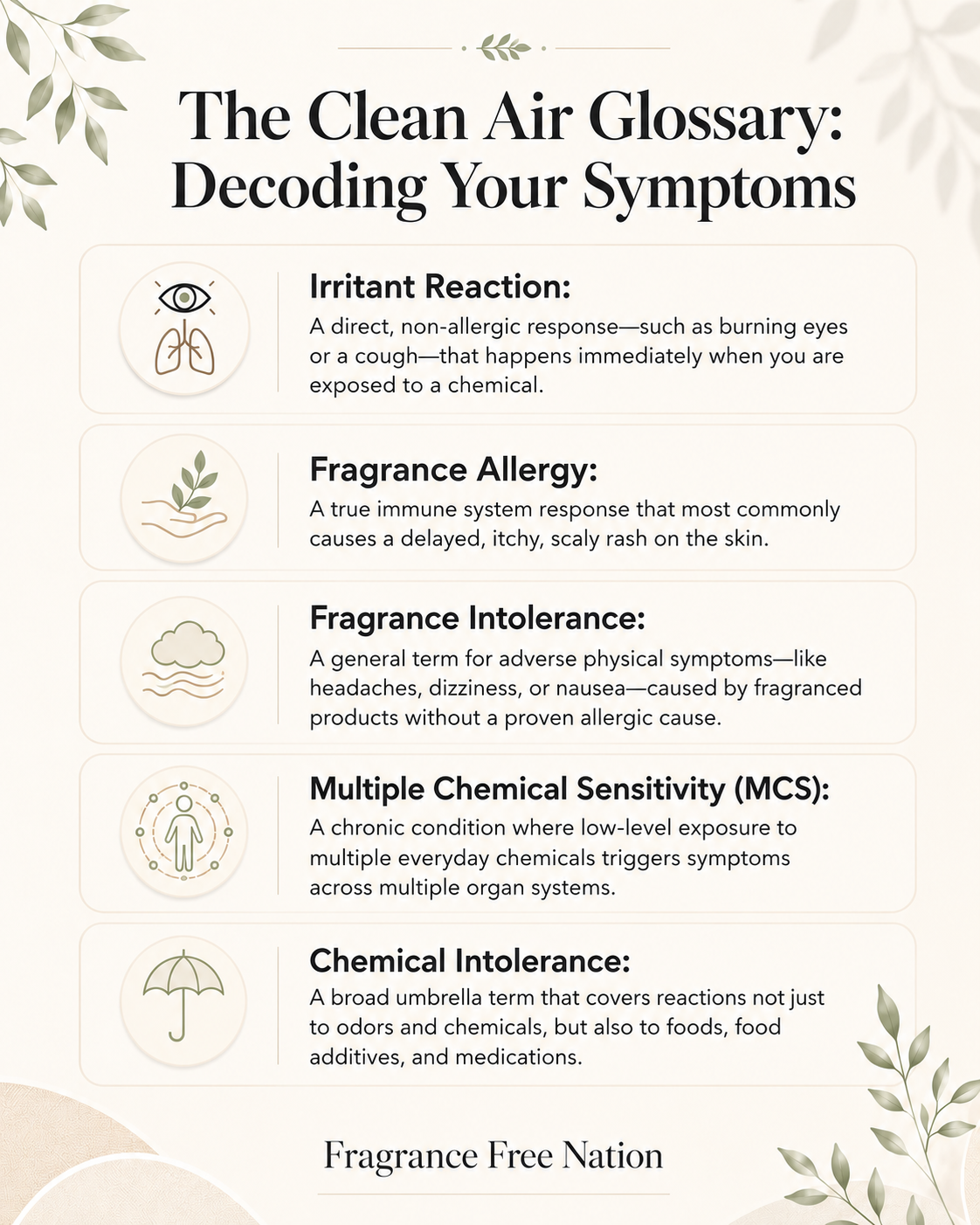
Irritant Reaction: This is a direct local effect of an exposure on your skin, eyes, nose, throat, or airways. According to DermNet, irritant contact dermatitis is due to irritation or repetitive injury to the skin rather than allergic sensitization, and it can occur after a single strong exposure or after repeated exposure. Fragrance exposure can also cause eye, nose, and throat irritation, coughing, wheezing, or shortness of breath in some people.
Fragrance Allergy: This is an established immune-mediated hypersensitivity, most often presenting as allergic contact dermatitis. DermNet describes it as a type IV delayed hypersensitivity reaction, usually involving a delayed eczematous rash - featuring itchy, scaly, inflamed, swollen, blistered, or well-demarcated patches - that can appear 24 to 72 hours after exposure, with fragrances in perfumes and household items listed among common triggers. Patch testing using a fragrance mix and Balsam of Peru detects approximately 75% of fragrance allergy cases, and an estimated 1% to 2% of the general population is allergic to fragrance.
Fragrance Intolerance or Sensitivity: This is a broad, descriptive label for adverse symptoms provoked by fragranced products without proving a specific allergic mechanism. In Steinemann's survey research, fragrance sensitivity is defined as adverse health effects from fragranced consumer products. People with this condition report a wide variety of symptoms, including headaches, dizziness, cough, shortness of breath, nausea, fatigue, migraine headaches, respiratory and mucosal symptoms, skin problems, asthma attacks, and neurological symptoms.
Multiple Chemical Sensitivity (MCS) / Idiopathic Environmental Intolerance (IEI): This is a debated clinical syndrome involving chronic or recurrent symptoms across multiple organ systems. The commonly cited 1999 consensus criteria describe MCS as a chronic condition with symptoms that recur reproducibly in response to low levels of exposure to multiple unrelated chemicals, improve or resolve when incitants are removed, and occur in multiple organ systems. The Merck Manual describes IEI as recurrent, nonspecific symptoms attributed to low-level exposure to chemically unrelated substances, and notes that diagnosis is by exclusion. Reported symptoms are broad and can include palpitations, chest pain or tightness, shortness of breath, dizziness, and difficulty concentrating.
Chemical Intolerance: This is a broader umbrella term that includes reactions to odors and chemicals, as well as intolerances to foods, food additives, and drugs or medications. It has been described in research as multisystem symptoms triggered by low-level exposure to xenobiotics, including chemicals, foods and food additives, and drugs and medications.
2. Is It All In My Head?

The short answer is no, but the reality is complex. Current evidence does not justify reducing all fragrance intolerance or MCS to "just anxiety" or "just belief." Fragrances can trigger documented health symptoms, including headaches, dizziness, eye, nose, and throat irritation, coughing, wheezing, shortness of breath, and asthma or COPD symptoms, and fragrance allergy can also be a true allergic contact dermatitis confirmed by patch testing.
At the same time, MCS/IEI is medically complex and debated. Cleveland Clinic describes MCS as a proposed name for symptoms that seem to occur after exposure to small amounts of substances, and notes that some experts believe other conditions may explain the symptoms. The Merck Manual states that the etiology of IEI is unclear and that objective evidence of systemic inflammation, cytokine excess, or immune-system activation is lacking.
Real biological processes, such as exposure chemistry, contact allergies, airway irritation, asthma triggers, and indoor air pollutants, can coexist with expectancy, conditioning, stress-response, and symptom-amplification mechanisms. A 2024 clinical review states that the etiology of MCS is still debated and reviews multiple proposed contributing factors, including stress-response and psychological mechanisms.
Therefore, psychological factors can shape symptom intensity, avoidance, disability, and coping for some patients, but they should not be used to dismiss symptoms as imaginary. Cleveland Clinic states that these symptoms are real even though clinicians may have difficulty pinpointing the cause.
3. What Should I Do?
Because these conditions often overlap, the most helpful clinical approach is to identify which recognized syndromes are present and address those first. The Merck Manual describes IEI/MCS evaluation as a diagnosis of exclusion, meaning other conditions should be considered and ruled out first. In real practice, a patient may have a fragrance allergy, asthma or airway irritation, rhinitis, migraine, vocal cord dysfunction (now often called inducible laryngeal obstruction), and a broader chemical intolerance phenotype all at once.
Here are the recommended steps for diagnosis and management:
Seek targeted testing: If you suspect a fragrance allergy, ask a dermatologist or allergist for patch testing, which remains the gold standard for diagnosing allergic contact dermatitis when contact allergy is suspected. If you experience respiratory symptoms, standard spirometry and pulmonary evaluation can be used to check for asthma, while nasal and allergy evaluation may be used to assess rhinitis.
Rule out mimics: Work with a doctor to rule out conventional conditions that can mimic chemical sensitivities, such as chronic sinus disease, vocal cord dysfunction, migraines, asthma, rhinitis, or panic syndromes, since IEI/MCS is generally evaluated by excluding other explanations. Vocal cord dysfunction can be mistaken for asthma and can be triggered by cleaning chemicals, strong smells, perfumes, smoke, ammonia, and bleach, while panic attacks can include shortness of breath, chest pain, dizziness, nausea, rapid heartbeat, and throat tightness.
Use structured screening tools: For suspected MCS or chemical intolerance, clinicians can use standardized questionnaires like the Quick Environmental Exposure and Sensitivity Inventory (QEESI) or the Brief Environmental Exposure and Sensitivity Inventory (BREESI) to document your symptom burden and exposure patterns. As described in the research, QEESI is a widely used clinical screening test and research tool for identifying chemical intolerance, and BREESI is a three-question screening tool validated against it. These are screening and documentation tools; they do not prove one single biological mechanism by themselves.
Consider behavioral support: While there is no proven medication that cures MCS itself, behavioral therapies and supportive psychotherapy may help improve illness perception, coping strategies, and function for some patients. A 2024 review states that because of the complexity of MCS pathophysiology, there is no specific drug to treat MCS, and it discusses cognitive behavioral therapy and psychotherapy as possible supportive approaches. The Merck Manual also describes psychological support as part of management for IEI.
4. What to Do While You Figure It Out
It can take time to find a doctor who understands environmental sensitivities, and the diagnostic journey can feel overwhelming. But you do not have to wait for a definitive label to start reducing exposures that reliably trigger symptoms. If you are stuck in the "in-between" phase, here is how you can protect yourself right now:
Take control of your home environment: For indoor air quality, the most effective and best-supported first step is source control - reducing or removing pollutant sources - along with ventilation when appropriate. The EPA states that the most effective ways to improve indoor air are to reduce or remove pollutant sources and ventilate with clean outdoor air. Start by removing fragranced laundry detergents, scented candles, air fresheners, and perfumed personal care products from your living space.
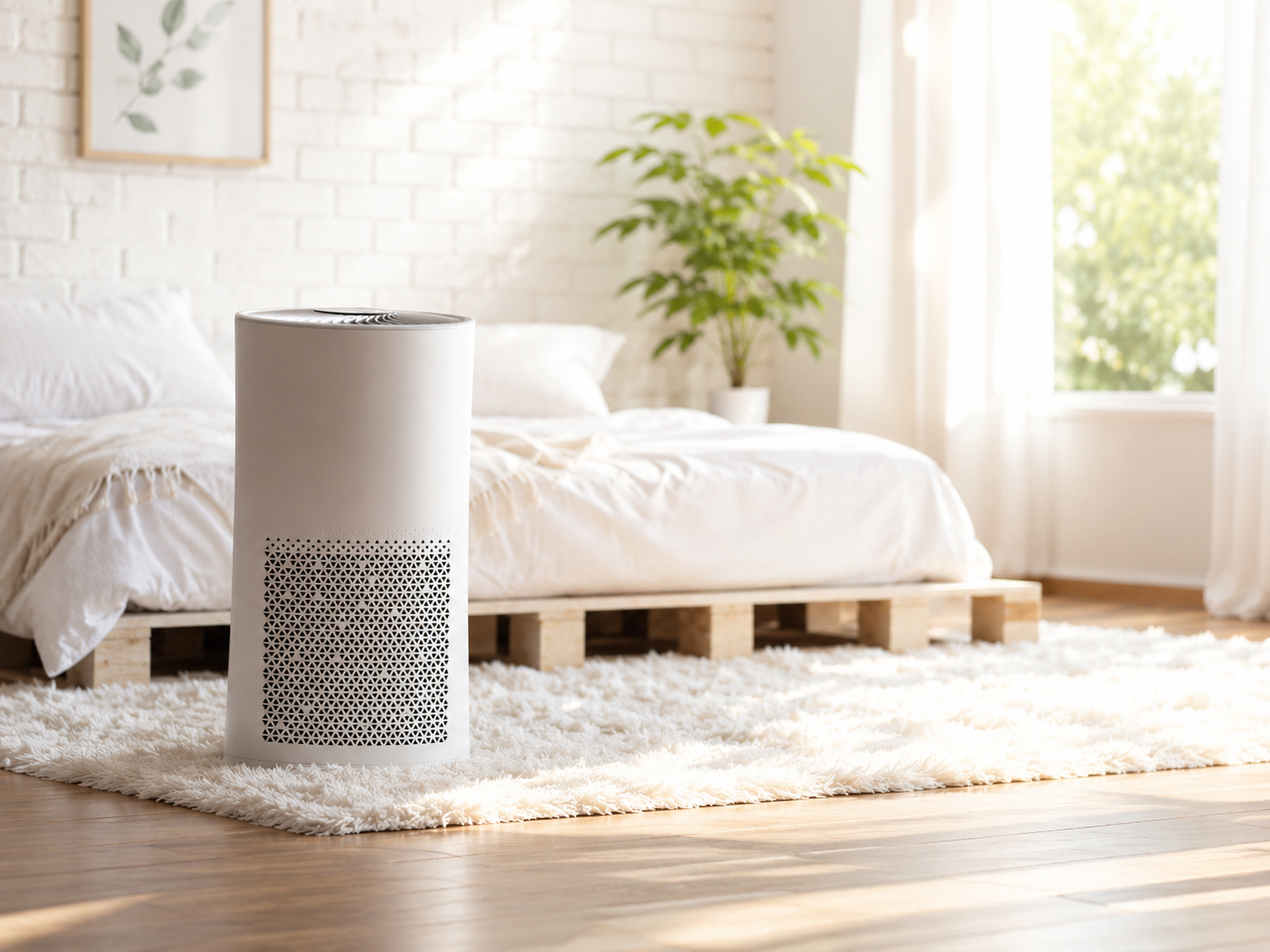
Filter your indoor air: If you cannot completely avoid indoor pollutants, a portable air cleaner may help as a supplement to source control and ventilation. The EPA states that portable air cleaners and HVAC filters can reduce indoor air pollution but cannot remove all pollutants. Ensure the unit is appropriate for what you are trying to filter: HEPA filters are commonly used for particles, while activated carbon or another gas-phase filter is needed for gases and some VOCs. Most filters are designed for either particles or gases, and activated carbon filters can help remove gases when enough material is used.
Track your triggers: Keep a simple log of your symptoms and what you were exposed to right before they started. Documenting the timing and reproducibility of symptoms can help clinicians take a careful exposure history and consider other diagnoses. DermNet notes that a detailed history is essential in allergic contact dermatitis evaluation, including products used at home and work.
Know you are not alone: When your everyday environment makes you sick, the isolation can feel profound, but survey data suggest this is a widespread reported issue. In nationally representative online surveys across the United States, Australia, the United Kingdom, and Sweden, 32.2% of adults reported fragrance sensitivity, 19.9% reported chemical sensitivity, and 7.4% reported medically diagnosed MCS, and in the U.S. alone, 25.9% of the population reported chemical sensitivity. These figures should be described as self-reported survey data, not independently confirmed clinical diagnoses for every respondent. You are part of a global community navigating similar challenges, and your experience is valid.
Start building your safe space: You do not have to navigate this transition alone. When you are ready to start replacing your everyday items, prioritize fragrance-free alternatives rather than relying only on the word "unscented." The EPA's Safer Choice program explains that "fragrance-free" means fragrance materials or masking scents are not used, while "unscented" may mean the product contains chemicals that neutralize or mask odors. Explore our thoughtfully curated selection of fragrance-free household and personal care essentials to get started.
A Note on Medical Perspectives
While this guide provides a framework for understanding fragrance-related symptoms, it is important to remember that medical terminology, especially regarding syndromes like Multiple Chemical Sensitivity (MCS), is still a subject of ongoing discussion in the scientific community.
Please use this information as a tool to help you document your triggers and communicate clearly with your healthcare provider. This guide is not intended for self-diagnosis; rather, it is designed to help you work with a physician to rule out or treat well-defined conditions like asthma, allergies, or chronic sinusitis.