
Walking down the baby aisle is exhausting. Almost every bottle claims to be "gentle," "hypoallergenic," and perfectly safe for your newborn. But behind the calming lavender scents and pastel labels is a simple, medically honest reality: fragrance offers zero health benefits to your baby.
What it does do is introduce completely unnecessary risks. Because a baby's skin, immune system, and lungs are still rapidly developing, they are highly vulnerable to the irritants and allergens hidden inside scented products. If you are wondering whether going fragrance-free is actually worth the effort, the medical consensus is a resounding yes.
Here is exactly why you should skip the scent, and the priority swaps that actually make a difference.
Babies Are Not Just Miniature Adults
To understand why standard products do not work for babies, you just need to look at how they are growing. You don't need a medical degree to see why simpler is better during their first year:
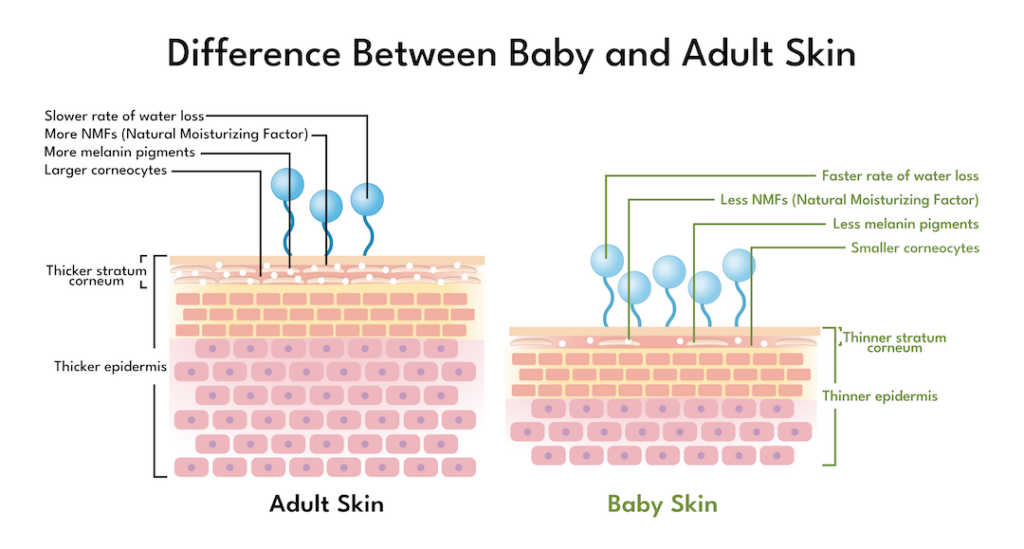
- Their skin is under construction: A newborn's skin is thinner, more permeable, and less mature than adult skin. It absorbs more of what you put on it, making it an easy target for the complex chemicals that make up fragrances.
- They breathe more air: Pound for pound, babies breathe significantly more air than adults do. This means airborne fragrances - like plug-ins, candles, or strongly scented laundry - are a much heavier respiratory burden for their tiny lungs.
- Eczema is a massive risk: Up to 25% of children get eczema, and about 60% of those cases start in the first year of life. Dermatologists explicitly point to fragranced baby products and laundry detergents as massive eczema triggers.
Don't Get Fooled by the Labels
The baby industry is famous for misleading marketing. You cannot trust the front of the bottle; you have to know what the words actually mean legally. Watch out for these three major traps:
- "Unscented" does not mean Fragrance-Free. This is the biggest trap for parents. "Unscented" usually means the company added hidden masking chemicals just to neutralize the bad smell of the raw ingredients. You want the label that explicitly says Fragrance-Free.
- "Natural" is still a fragrance. Do not be fooled into thinking plant-based is harmless. To a newborn's immune system, botanical extracts, essential oil blends, and lavender are still completely unnecessary exposures that can trigger allergic contact dermatitis.
- "Hypoallergenic" is just a buzzword. The FDA does not regulate this word. A company can legally slap "hypoallergenic," "gentle," or "pediatrician approved" on the front of a bottle that is packed with synthetic perfumes. Ignore the buzzwords and check the ingredient list.
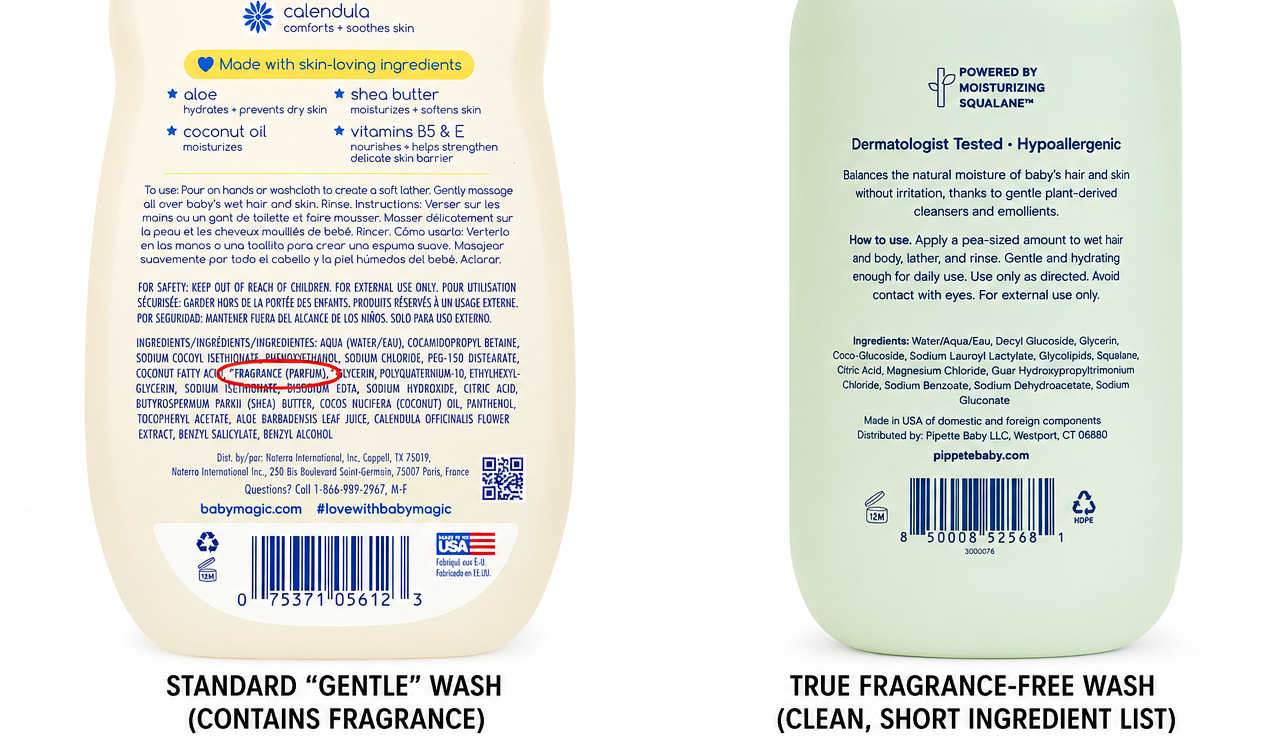
Visual Tip: If you compare the back of a highly-scented baby wash to a dermatologist-recommended fragrance-free wash, you will see a massive difference in the length of the ingredient list. Fewer ingredients mean fewer chances for a reaction.
Where to Start: The Priority Swaps
You do not need to throw away everything in your house today. If you want to protect your baby's developing system, focus entirely on what stays on their skin and what stays in their air.
Here is your hit list for the most important swaps:
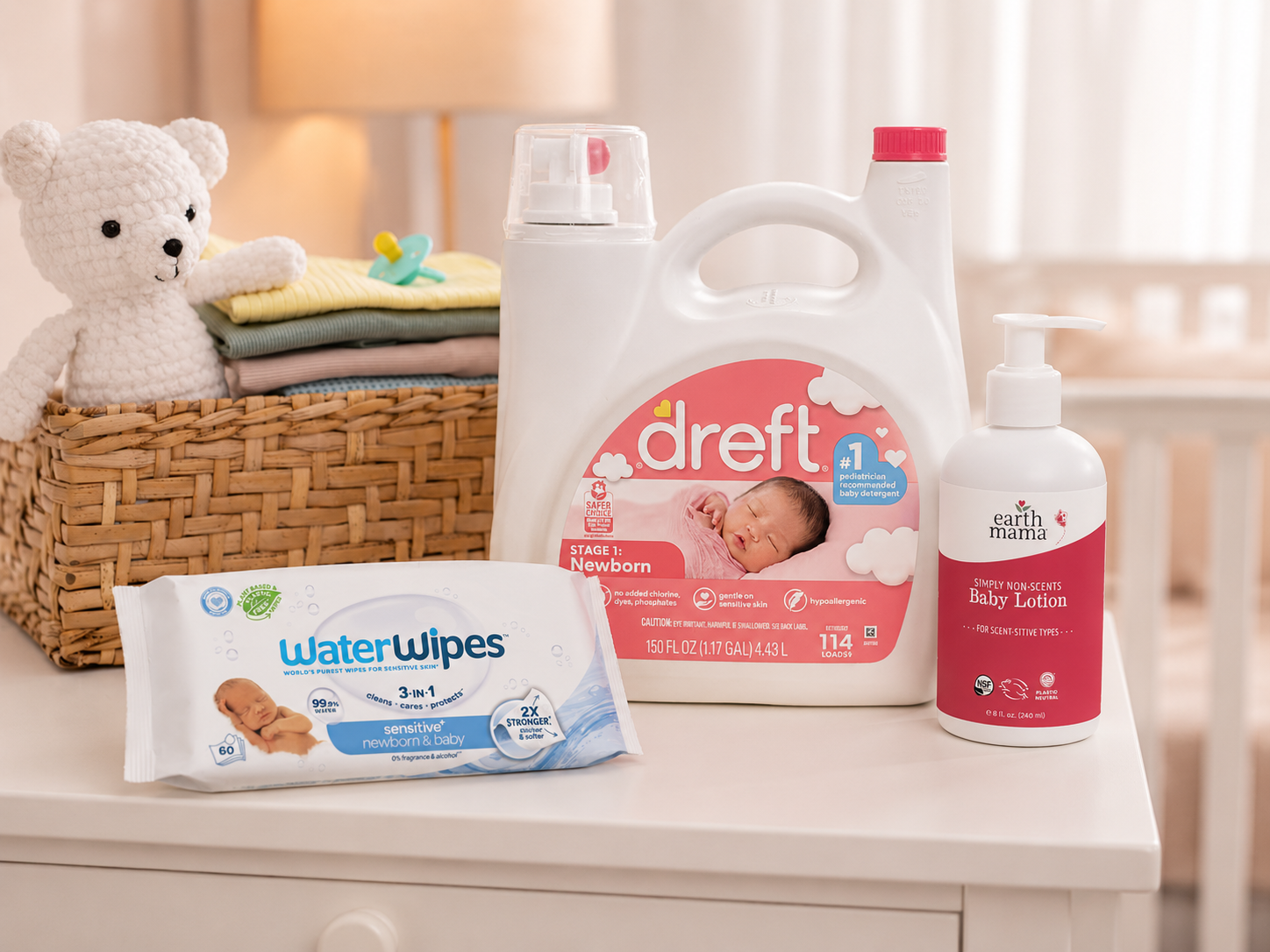
- Laundry Detergent: Swap to a fragrance-free, dye-free detergent. More importantly, completely ditch fabric softeners and dryer sheets. These are designed to leave a chemical coating on fabrics, meaning your baby is sitting in those chemicals 24/7 via their clothes and crib sheets.
- Leave-On Lotions and Creams: Baby wash gets rinsed down the drain, but moisturizers and diaper creams sit on the skin and absorb. These absolutely must be fragrance-free. Stick to simple barrier creams like zinc oxide.
- Baby Wipes: You use these multiple times a day on your baby's most sensitive areas. Opt for fragrance-free wipes or simple water wipes.
- Indoor Air: Remove scented plug-ins, heavily scented candles, room sprays, and essential oil diffusers from the rooms where your baby sleeps and plays.
The Bottom Line
You cannot protect your baby from every chemical in the world, and a single scented bath time is not going to ruin their development. But choosing fragrance-free products is the easiest, most practical way to remove a massive category of unnecessary irritants from their daily life. Stick to the basics, read the back of the bottle, and let your baby's natural scent be enough.
Ready to make the swap? Skip the label-reading and explore a curated list of truly fragrance-free baby products at Fragrance Free Nation.