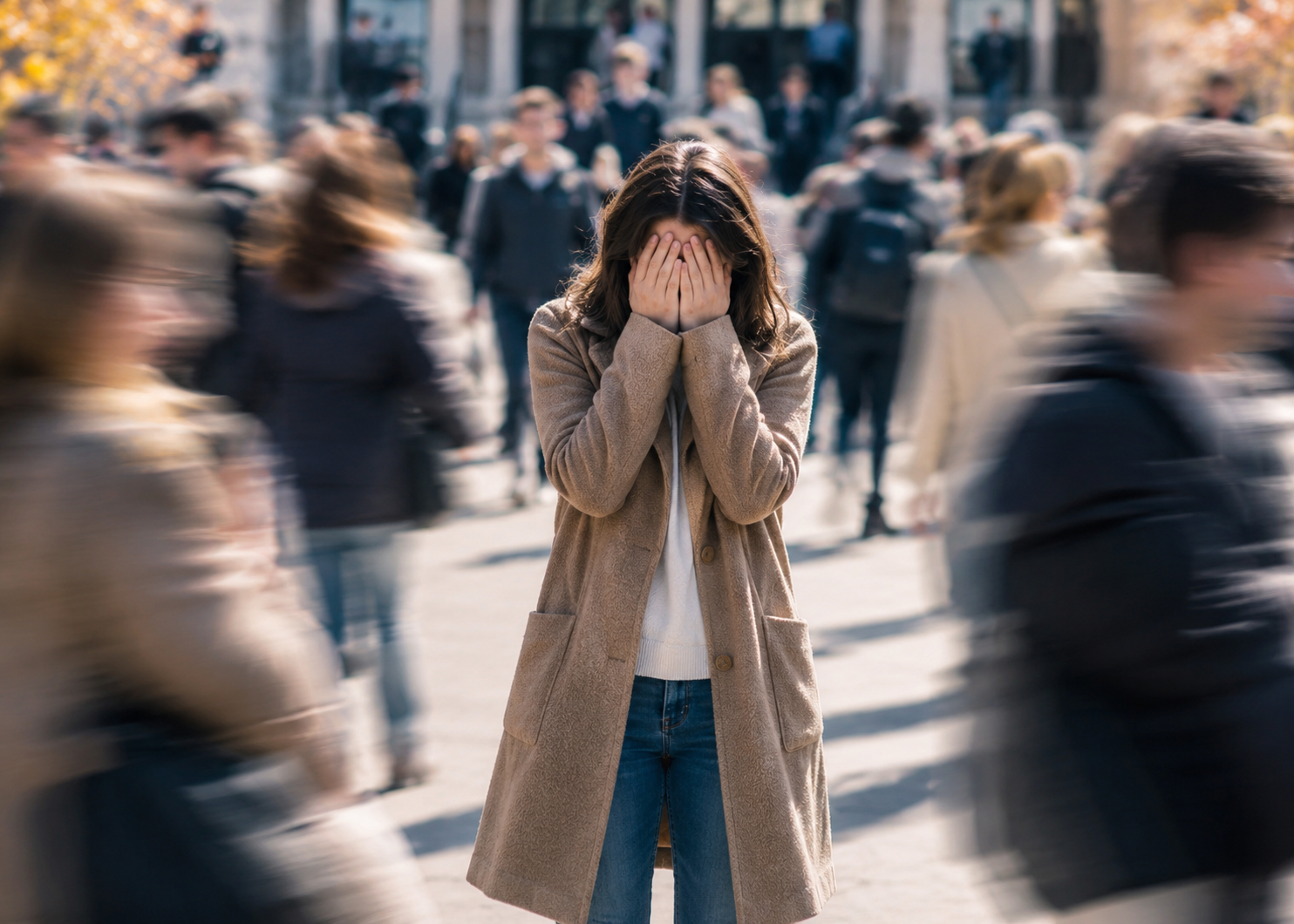

Living with fragrance intolerance can feel profoundly isolating. When every store, office, clinic, and public space feels like a hazard, it is easy to believe that the world has decided your health does not matter.
But the reality is much more hopeful. The loudest, most dismissive voices do not represent the majority. This guide is designed to help you reframe the issue, navigate social resistance, and stand firm in the fact that clean air is an access right, not a personal preference.
Section 1: Reality Check - You Are Not Alone
When people tell you that you are too sensitive or that the issue is in your head, look to the data. Fragrance intolerance is not a rare personal quirk; it is a widespread public health issue.
According to international research, roughly one in three adults report health problems from fragranced products. About one in five report health problems simply from being near someone wearing fragrance, and more than one in five have been prevented from going somewhere because the exposure would make them sick.
Public Support for Fragrance-Free Spaces
The majority of the public actually favors cleaner, safer air over scented environments. For example, roughly two thirds of people support fragrance-free airplanes, and a majority support fragrance-free healthcare settings. Nearly half support fragrance-free workplaces, compared to only about one in five who oppose them.
Section 2: The Legal and Ethical Boundary - Preference vs. Access
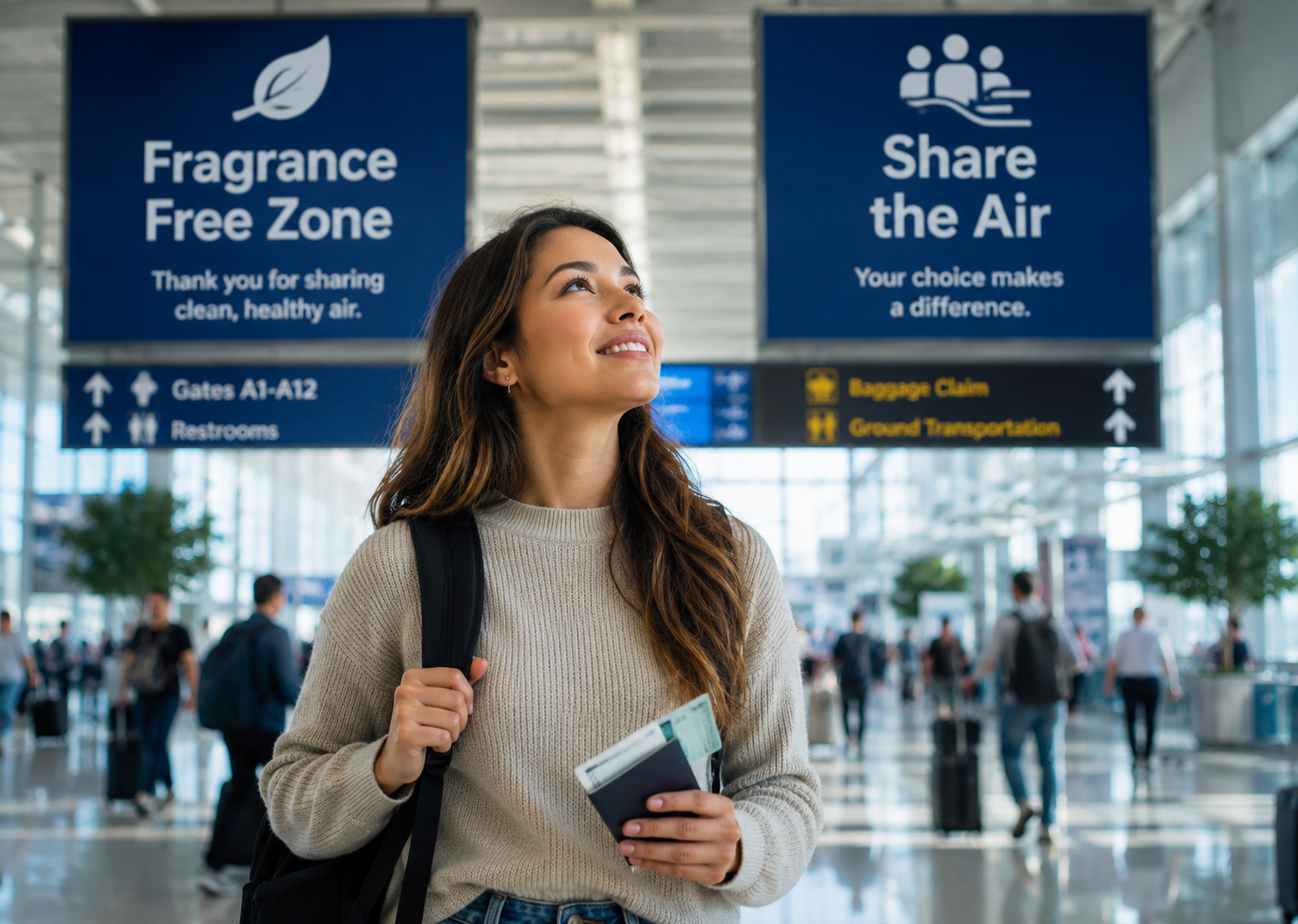
A common hurdle in advocacy is the belief that wearing scent is an absolute personal freedom. It is crucial to understand and be able to articulate that wearing fragrance is not a protected legal right.
Private Expression vs. Public Exposure
Fragrance is culturally treated as grooming, beauty, or personal expression. However, legally and ethically, a critical boundary is crossed the moment a scent leaves a person's body or clothing. Inside the home, fragrance is a private preference. In shared air, fragrance ceases to be just private expression; it becomes an involuntary exposure imposed on others.
What the Law Prioritizes
There is no general legal right to wear fragrance into every shared space, especially when it interferes with another person's ability to breathe, work, receive care, or access public life. When a person's preference to wear perfume, cologne, or scented laundry products conflicts with another person's disabling health condition, the legal focus shifts to providing reasonable accommodations for the person being harmed in workplaces, housing, schools, and healthcare settings.
This is not just theory. In one widely reported case, a City of Detroit employee with a chemical sensitivity to a coworker's perfume and air freshener reached a settlement, after which the city restricted scented products in her workplace. As one employment attorney summarized it, a person does not necessarily have a right to wear perfume, but a person does have a right to be able to breathe in the workplace.
The Bottom Line: A person's preference to scent the air does not override another person's right to breathe, work, or access the world.
Section 3: Understanding the Resistance
If the data and legal logic support clean air, why is navigating the world still so difficult? It helps to break the public down into two distinct groups so you know who you are dealing with.
The Uninformed Majority: The Reachable Public
Most people are not actively against you; they are simply uninformed. They have never been asked to think about scent as an access barrier. Because they do not know the law or the health risks, they view it strictly as a personal style choice. When approached without shame or defensiveness, many of these people are willing to understand and adapt.
The Resistant Minority: The Vocal Few
Roughly one in five people will actively resist fragrance-free changes. When you encounter this group, expect gaslighting, claiming the issue is exaggerated, psychological, or made up. Expect defensiveness, feeling personally accused, or insisting that because they are fine, everyone else is fine. Expect inconvenience framing, viewing your health needs as drama or an attempt to control them.
This dismissal is not new. People with severe chemical intolerance have long described a medical and social establishment that is quick to doubt them.
Crucial Mindset Shift: The disbelief of the resistant group is not evidence that your condition is unreal. Their discomfort is not proof that your request is unreasonable. It is simply proof that access movements always meet resistance when they challenge what society considers normal.
Section 4: How to Frame the Issue Clearly
The way forward is not to beg people to care or to appeal strictly to their emotions. The way forward is to name the issue clearly and professionally. Use these core pillars to guide your conversations and advocacy:
It is an access issue, not a preference. Just as a ramp provides access for a wheelchair user, fragrance-free air provides access for someone with chemical sensitivities.
It is not a personality conflict. This is not about whether you like a person or their style; it is about how your body physiologically reacts to chemical exposures. Fragranced products are not just smells; they are measurable emissions and exposures in shared air.
It is not an attack on scent. The goal is not to police beauty, hygiene, or personal identity. The goal is simply to make shared, public air safe for everyone, including the many people with asthma whose breathing is affected by fragranced products.
Shift the default. The goal of advocacy is to move the burden of proof off the person being harmed and change the default environment to one that is safe by design.
Section 5: Emotional Grounding for the Journey

Recognize the resistance without letting it define your reality. Do not let the cruelest voices convince you that no one will listen.
You are navigating a systemic barrier, not just symptoms. Give yourself grace. It is exhausting to constantly defend your right to breathe safely.
Remember that many people are one good explanation away from understanding. There is a large, persuadable, and often quietly supportive public waiting for the language to see fragrance as the access barrier it truly is.
Do not be dismayed. Many will listen.
You Are Not Alone
You do not have to navigate this journey by yourself. Advocating for clean air out in the world is hard work, but finding safe products for your home should not be. At Fragrance Free Nation, we are here to make building your safe haven easy, where every product is already fragrance-free and essential-oil-free and you can exclude any other ingredient you want to avoid. Visit us today to shop trusted, truly fragrance-free essentials.
We understand what you need, and we are right here with you.
References
- Steinemann A. International prevalence of fragrance sensitivity. Air Quality, Atmosphere & Health. 2019;12:891-897. doi.org/10.1007/s11869-019-00699-4
- Common Scents? Regulating the Use of Fragrances in Workplaces. core.ac.uk/download/pdf/151480534.pdf
- CBS News. Stink Over Perfume At Detroit Workplace. cbsnews.com/news/stink-over-perfume-at-detroit-workplace
- The Guardian. Allergic to the world: can medicine help people with severe intolerance to chemicals? (2022). theguardian.com
- Steinemann A. Fragranced consumer products and effects on asthmatics: an international population-based study. Air Quality, Atmosphere & Health. 2019;12:643-651. doi.org/10.1007/s11869-019-00693-w
- Steinemann A. Fragranced consumer products: exposures and effects from emissions. Air Quality, Atmosphere & Health. 2016;9:861-866. doi.org/10.1007/s11869-016-0442-z