

Did you know that kids in the U.S. spend up to 90% of their lives indoors, and a massive portion of that time is spent sitting inside school classrooms? While we worry about playground safety and nutritious school lunches, there is an invisible hazard floating in our classrooms that often goes completely unnoticed: fragrance.
From the scented plug-in in the corner of the classroom to the laundry soap on a classmate's sweater, fragrances are everywhere. This guide is designed to break down the science of why these everyday scents aren't as harmless as they seem, how they impact both healthy children and those with asthma, and how we can work together to clear the air in our schools.
1. Why Are Kids So Vulnerable to Scented Products?
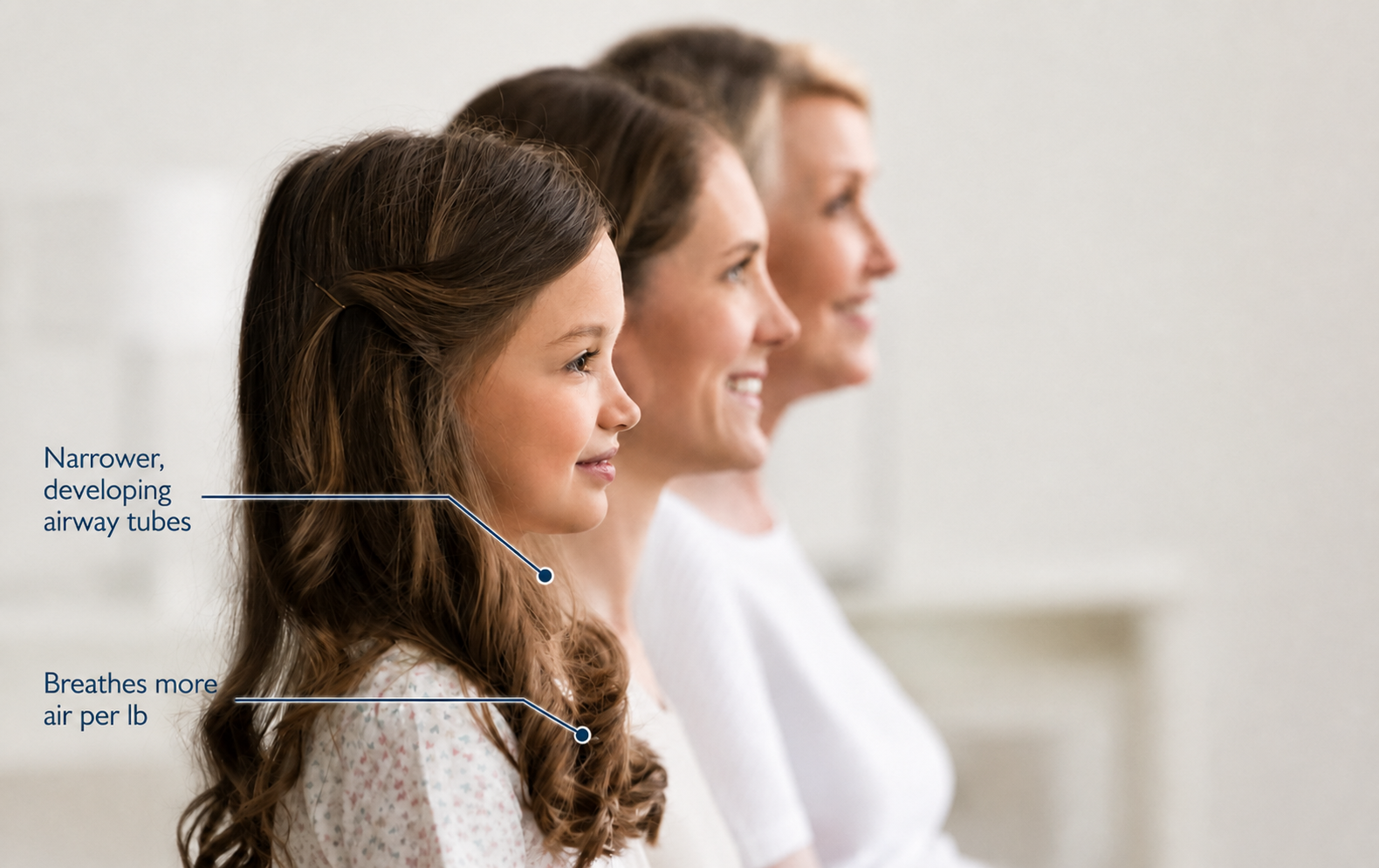
Many adults can walk through a perfume aisle or sit in a freshly cleaned room without a second thought. But children's bodies are not just miniature versions of our own; they are biologically unique and far more vulnerable to chemical exposures:
They Breathe More Air: Pound for pound of body weight, children breathe in more air, eat more food, and drink more water than adults. As the Environmental Protection Agency notes, children breathe more air in proportion to their body weight than adults do. If there are chemical vapors in a room, a child will inhale a much larger dose relative to their body size than an adult standing right next to them.
Narrower Airways: A child's lungs and airways are still actively developing. Because their airway tubes are much narrower, even a tiny amount of irritation or swelling can make it significantly harder for them to breathe.
Rapid Development: The brain grows to roughly 90% of its adult size in the early years of childhood. During these critical windows, their developing neurological and endocrine (hormone) systems are highly sensitive to disruption by synthetic chemicals.
2. The Direct Threat to Kids with Asthma
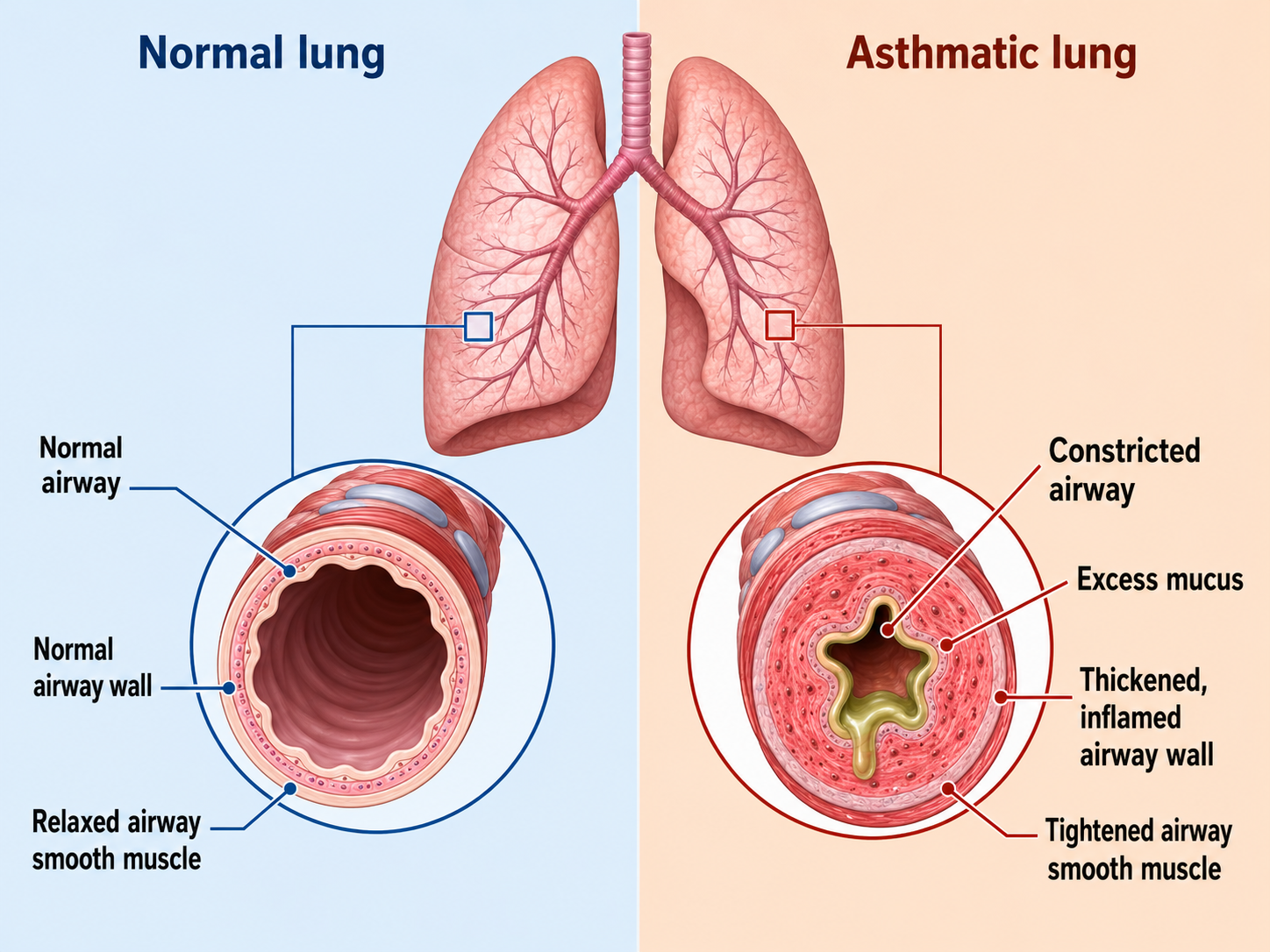
For children with asthma, fragrance isn't just an annoyance, it is a physical trigger that can cause a sudden, dangerous medical emergency.
The Nerve-Airway Connection
When a child inhales a strong scent, the chemicals do not just trigger their sense of smell (Cranial Nerve I). They also stimulate the trigeminal nerve (Cranial Nerve V), which is responsible for protecting the nasal passages and airways from physical irritants. When this nerve detects chemical fumes, such as the alcohol bases used in perfumes, it immediately sends a panic signal to the body.
The body reacts by releasing inflammatory neuropeptides, which cause:
- The muscles around the airways to tighten and squeeze shut (bronchospasm).
- The airway tissues to swell.
- The body to produce excess, thick mucus.
What the Science Shows
This physical reaction is well-documented. In clinical studies, when asthmatic individuals with a sensitivity to scents were exposed to a common cologne for just 10 minutes, their lung function dropped by 18% to 58%. For many children, simply sitting next to a classmate wearing a heavily scented lotion or body spray can bring on immediate chest tightness, coughing, and wheezing.
3. What About Healthy Kids? The Surprising Risks
A common misconception is that fragrance is only a problem for "sensitive" kids with pre-existing allergies or asthma. However, toxicological research shows that fragrances pose serious developmental, hormonal, and neurological risks to completely healthy children, too:
It Can Actually Cause Asthma
Fragrance chemicals are classified as "asthmagens," meaning they can act as chemical sensitizers that cause a person to develop asthma for the first time in their lives. In one state occupational surveillance program, nearly a quarter of the work-related asthma cases tied to fragrance were new-onset, meaning the person had no prior history of asthma before the exposure. And the burden on people who already have asthma is enormous: in a nationally representative U.S. survey, nearly 28% of people with asthma reported an asthma attack triggered by fragranced products.
Hidden Hormone Disruptors (Phthalates)
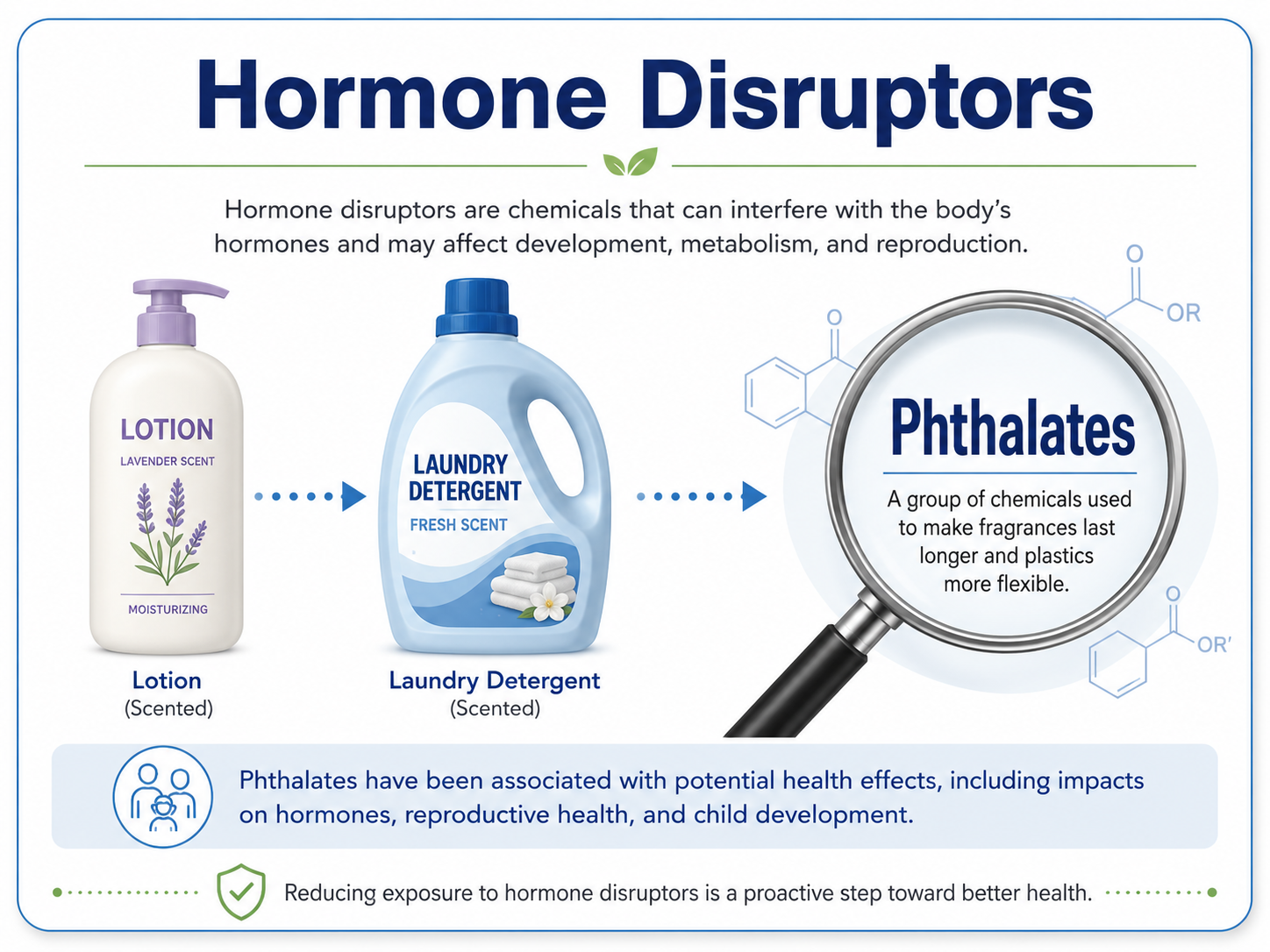
To make synthetic scents stick to clothes and linger in the air for hours, manufacturers use chemical fixatives called phthalates.
How They Work: Phthalates are known endocrine-disrupting chemicals (EDCs). They can mimic or block the body's natural hormones, sending incorrect signals to a child's developing organs.
The Health Links: Early childhood and prenatal exposure to phthalates has been linked to abnormal reproductive development and even developmental and attention issues like attention-deficit/hyperactivity disorder (ADHD).
Brain Fog and Headaches
Have you ever developed a dull headache or felt suddenly dizzy after being around a strong air freshener? Children experience this at an amplified level. Inhaling volatile chemical scents can trigger headaches, migraines, nausea, dizziness, and sudden "brain fog" or difficulty concentrating on classroom tasks.
Lifetime Allergies
Fragrance is the second most common contact allergen after nickel, and reactions to it show up in roughly one in five people tested for skin allergies. When kids are constantly bathed in fragranced soaps, baby lotions, and laundry detergents, their immune systems can become permanently sensitized. This can result in a lifelong struggle with contact dermatitis, a painful condition causing itchy, red, cracked, and scaling skin.
The "Ozone" Chemistry Experiment in the Classroom
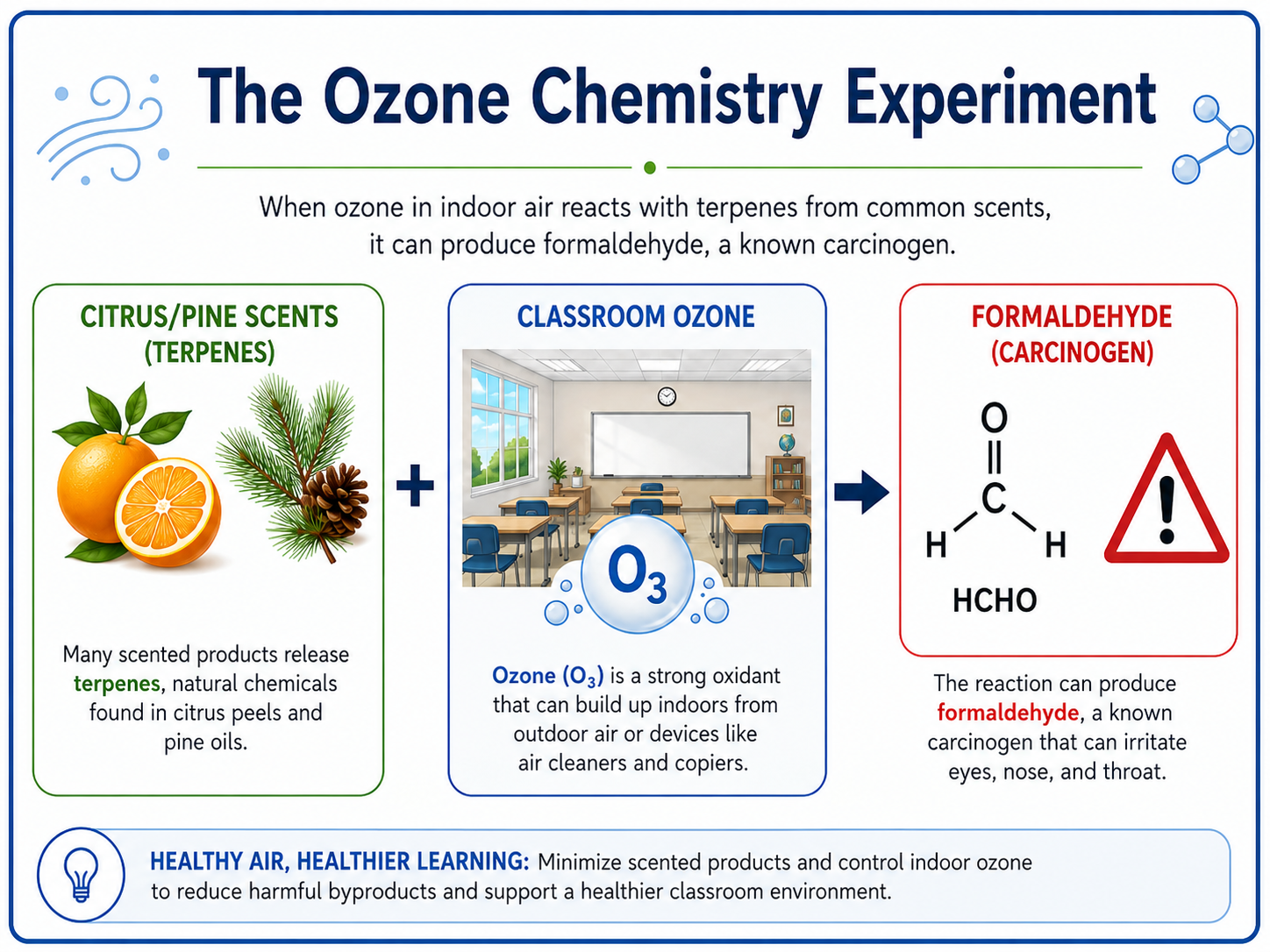
Many products use natural-sounding ingredients like citrus or pine scents (terpenes). However, when these volatile terpenes are released into the air, they react with natural ozone inside the room. This reaction forms a hazardous secondary pollutant: formaldehyde, which the World Health Organization's International Agency for Research on Cancer classifies as a known human carcinogen and severe lung irritant.
4. The School Connection: A Scent-Saturated Environment
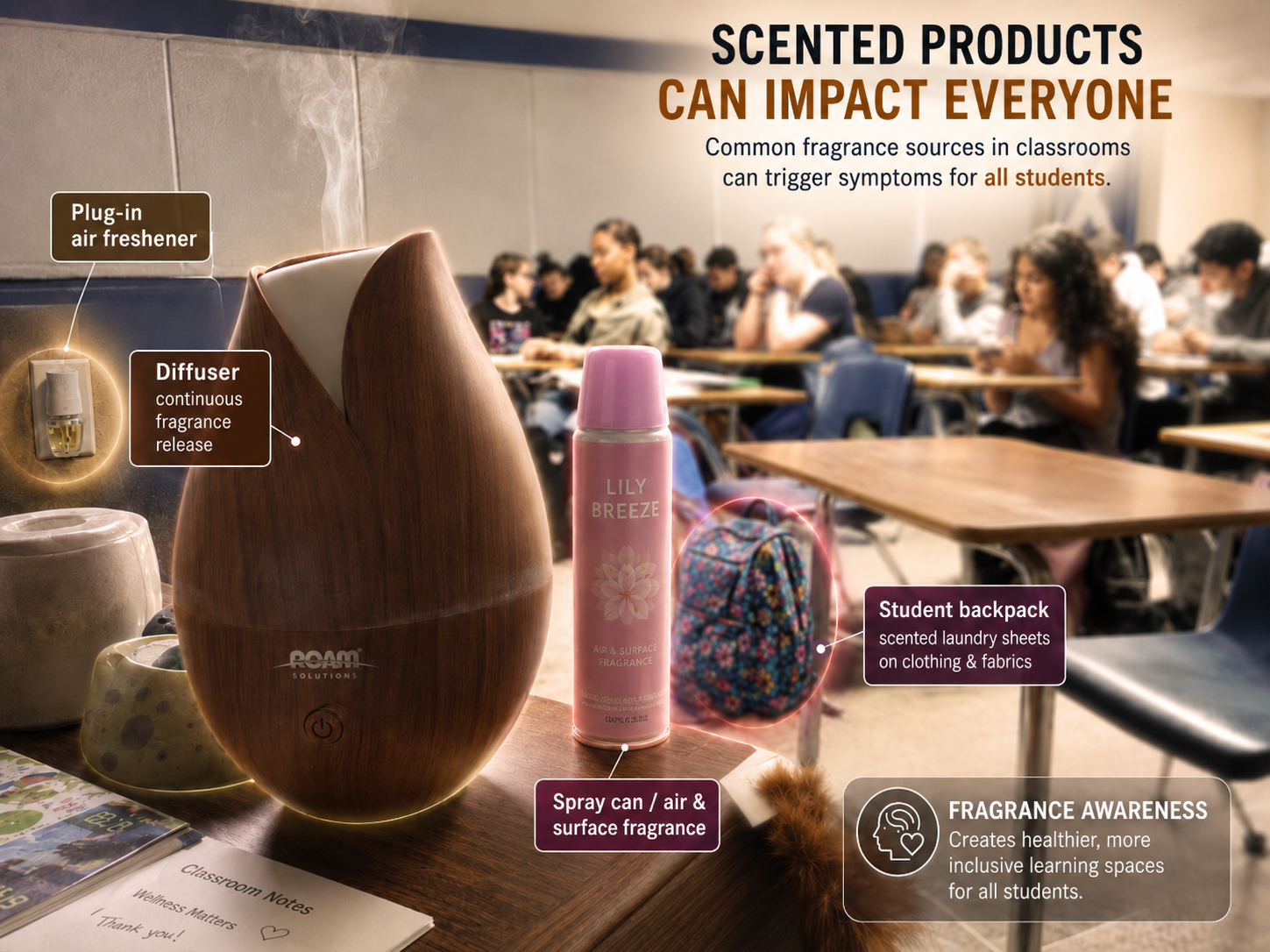
Schools are places of learning, but they are also major sources of passive chemical exposure. Because children spend up to six or seven hours a day in these enclosed spaces, small exposures add up to a heavy chemical burden.
Classmate Cosmetics and Laundry Scents: Many modern laundry detergents, fabric softeners, and dryer sheets are chemically engineered to bond to fabrics and release scent slowly over days. Body heat activates these chemicals, creating a "personal scent cloud" around every student.
Active Air Fresheners: Plug-ins, diffusers, and aerosol sprays do not clean the air. They simply release chemical vapors to mask unpleasant odors. Furthermore, heated plug-ins are a recognized physical safety hazard; millions of units have been recalled after reports of overheating, scorching, and fire.
Conventional Cleaning Products: The heavy disinfectants and fragranced cleaners used to wipe down desks can leave chemical residues that off-gas throughout the school day, irritating young lungs.
Unscented vs. Fragrance-Free: Knowing the Difference
When shopping for products, labels can be highly misleading due to regulatory loopholes. Here is what you need to know:
Fragrance-Free: This is the gold standard. It means the product has no added scents or masking chemicals whatsoever.
Unscented: This is a trap! According to the FDA's own labeling guidance, these products can still contain hidden masking agents, chemicals added specifically to neutralize the bad odors of the raw ingredients, leaving the product with no perceptible smell but still releasing volatile organic compounds (VOCs).
5. Simple Swaps and Classroom Solutions
Creating a healthier, scent-free space for our kids doesn't have to be complicated or expensive. It starts with making mindful, everyday choices.
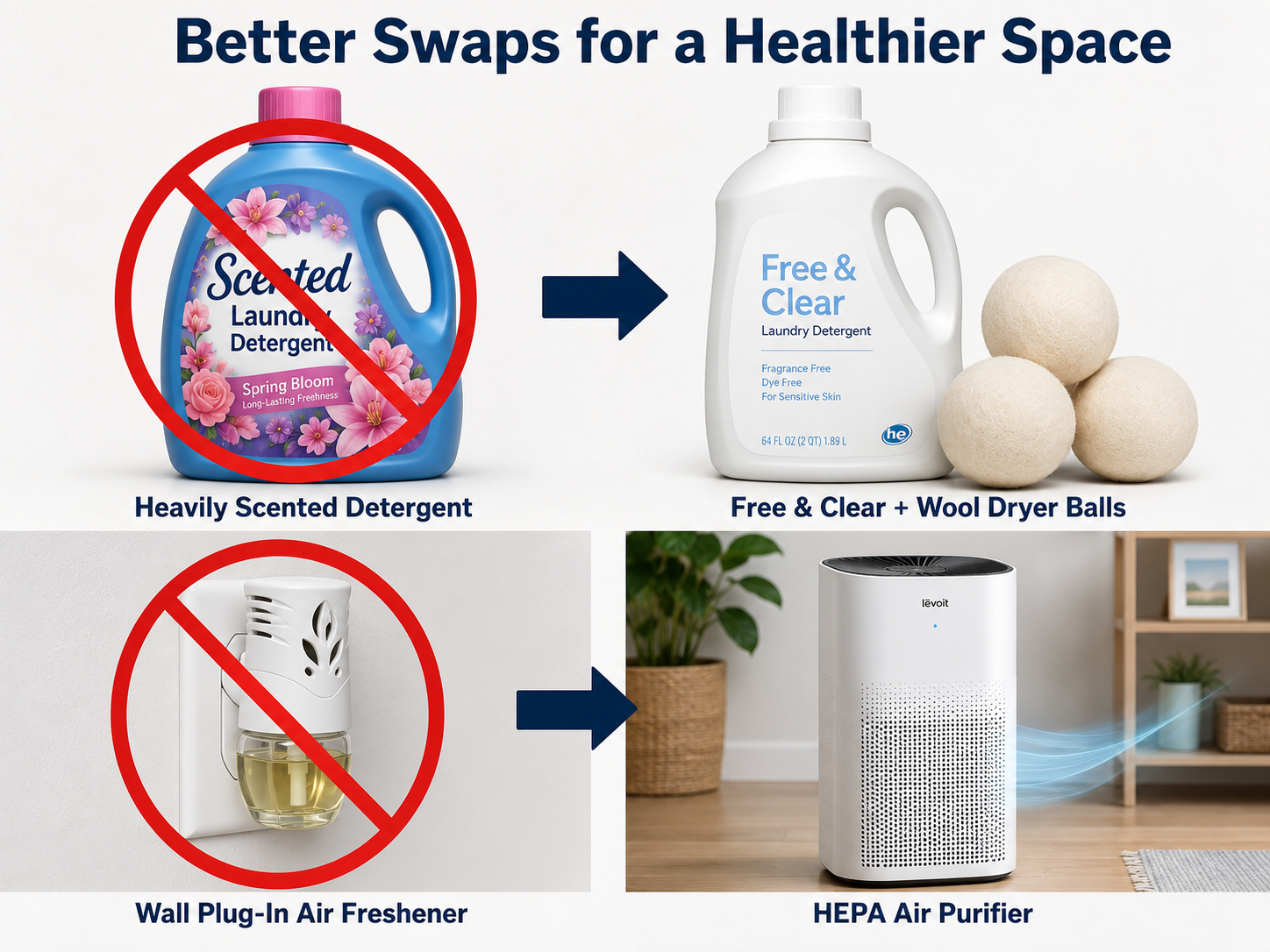
Tips for Fresh Air in the Classroom
Ditch the Scents, Fix the Smell: If a classroom smells musty, don't spray it. Locate the source of the odor (like a water leak causing mold or a dried-out floor drain trap) and fix it.
Ventilate Safely: Open classroom windows to let in fresh air when weather permits. Just make sure child safety is maintained by only opening windows up to 4 inches or installing window guards, and check your local air quality on airnow.gov first to ensure it's safe to breathe outside.
Adopt a Scent-Free Rule: Encourage teachers and school boards to establish formal "fragrance-free" guidelines, asking staff and students to voluntarily swap out heavily scented perfumes and lotions for clean, fragrance-free alternatives.
By making these simple shifts, we can ensure that our schools are safe, accessible, and healthy environments where every child can breathe easily and focus on learning.
Finding Fragrance-Free Essentials
Building a scent-free routine for your family should be easy. At Fragrance Free Nation, every product is already fragrance-free and essential-oil-free, and you can exclude any other ingredient you want to avoid. Visit us today to shop trusted, truly fragrance-free essentials for your home and your classroom.
References
- U.S. Environmental Protection Agency. Why Indoor Air Quality Is Important to Schools. epa.gov/iaq-schools
- Shim C, Williams MH Jr. Effect of odors in asthma. The American Journal of Medicine. 1986;80(1):18-22. pubmed.ncbi.nlm.nih.gov/3079951
- California Department of Public Health, Work-Related Asthma Prevention Program. Fragrances and Work-Related Asthma. cdph.ca.gov
- Steinemann A. Fragranced consumer products: effects on asthmatics. Air Quality, Atmosphere & Health. 2017;10:799-805. doi.org/10.1007/s11869-017-0536-2
- Swan SH, Main KM, Liu F, et al. Decrease in anogenital distance among male infants with prenatal phthalate exposure. Environmental Health Perspectives. 2005;113(8):1056-1061. pmc.ncbi.nlm.nih.gov/articles/PMC1280349
- Engel SM, Villanger GD, Nethery RC, et al. Prenatal phthalates, maternal thyroid function, and risk of attention-deficit hyperactivity disorder in the Norwegian Mother and Child Cohort. Environmental Health Perspectives. 2018;126(5):057004. doi.org/10.1289/EHP2358
- Cheng J, Zug KA. Fragrance allergic contact dermatitis. Dermatitis. 2014;25(5):232-245. journals.lww.com/dermatitis
- Nazaroff WW, Weschler CJ. Cleaning products and air fresheners: exposure to primary and secondary air pollutants. Atmospheric Environment. 2004;38(18):2841-2865. hero.epa.gov/reference/57058
- International Agency for Research on Cancer. IARC Monographs Volume 88: Formaldehyde, 2-Butoxyethanol and 1-tert-Butoxypropan-2-ol. World Health Organization; 2006. publications.iarc.who.int
- U.S. Food and Drug Administration. Cosmetics Labeling Guide. fda.gov
- U.S. Consumer Product Safety Commission. SC Johnson Recall of Glade Extra Outlet Scented Oil Air Fresheners. 2002. cpsc.gov