The Anatomy of Exclusion: How Fragrance Intolerance Strips Chemically Sensitive Individuals of the Right to Ordinary Life
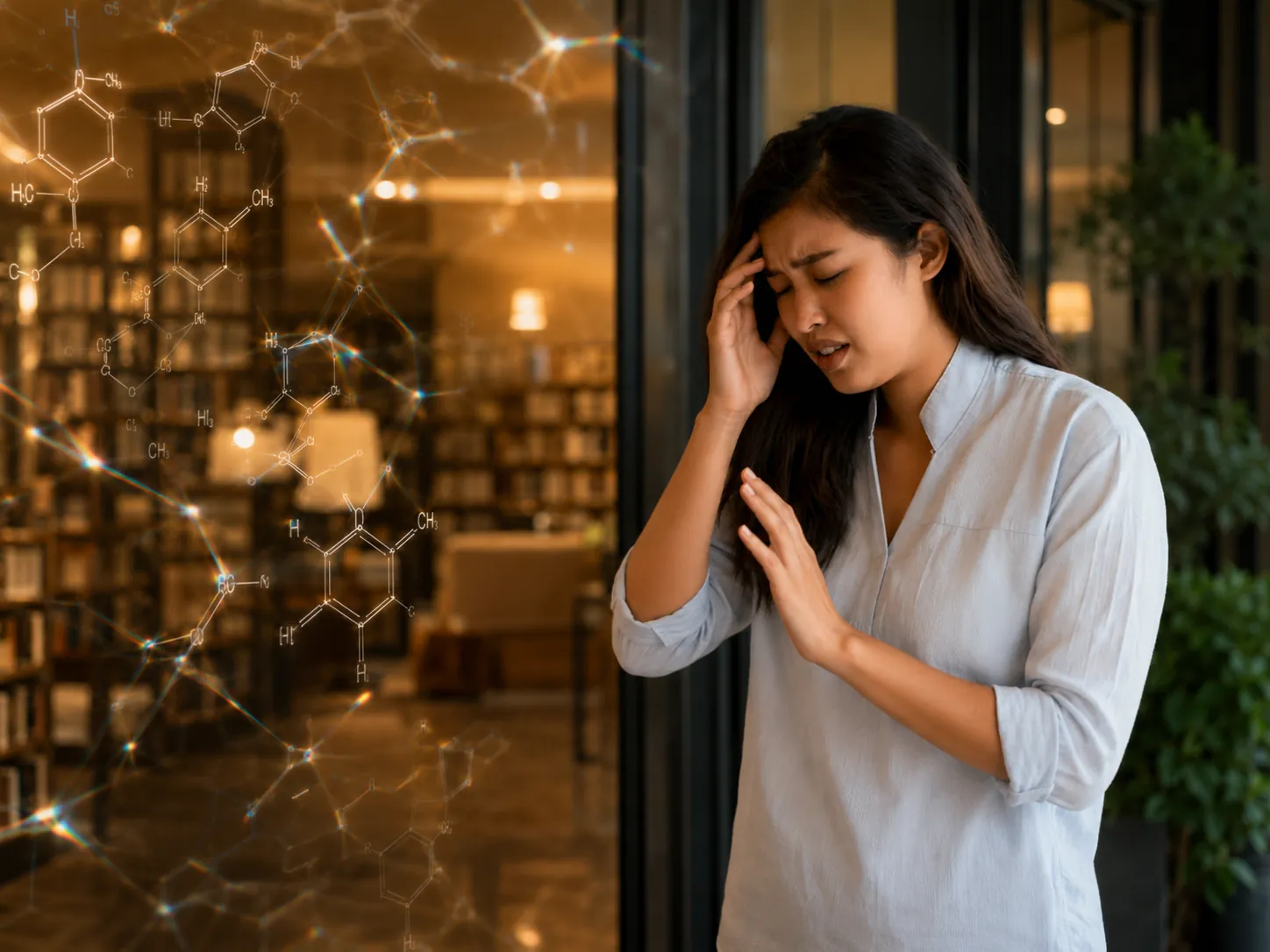
For people with severe fragrance sensitivities, everyday spaces are not just unpleasant, they are physically inaccessible. This guide examines how the near-ubiquitous presence of fragrance acts as a systemic barrier to ordinary life, the biology behind why the reactions are physical rather than imagined, and the legal frameworks that protect chemically sensitive individuals.
Fragrance Free Nation
· 7 min read
In this guide
The primary purpose of this guide is to examine how the near-ubiquitous presence of fragrances in modern society acts as a systemic barrier to basic societal participation for chemically sensitive individuals.
1. The Reality of Spatial Lockout
For people with severe fragrance sensitivities, common spaces aren't just unpleasant; they are physically inaccessible. A massive international survey by Wagner & Klaschka (2026) quantifies exactly how these everyday chemical emissions strip away basic participation in society.
Stripped Quality of Life: 76.84% of sensitive individuals report fragrance completely destroys their quality of life.
Social Exclusion: 68.31% are forced to avoid social activities almost entirely.
Workplace Disruption: 48.92% have lost jobs directly due to their chemical sensitivities.
Family Estrangement: 36.36% report a significant loss of contact or complete breakdown of relationships with family.
New fragrance-free finds, once a week
Products from independent fragrance-free shops, and the guides behind them. Unsubscribe anytime.
2. Pathophysiological Foundations: Why It's Physical, Not Just Psychological
A common point of skepticism is whether fragrance sensitivity is "all in the head." While cognitive conditioning and anticipatory anxiety can certainly amplify a physical response, the primary pathology is deeply biological, operating through two main pathways.
Initiation Stage: A major chemical event or chronic exposure compromises innate tolerance. Triggering Stage: Extremely low levels of volatile organic compounds (VOCs) trigger systemic, multi-system reactions.
The Neurogenic Pathway
Unlike classic IgE protein allergies (which trigger a traditional histamine response and can be identified via skin-prick tests), fragrance reactions are frequently driven by neurogenic inflammation.
Inhalation of VOCs: Volatile organic compounds (such as d-limonene, alpha-pinene, or linalool) enter the airway.
Receptor Binding: These compounds act as chemical irritants that bind directly to TRPA1 and TRPV1 ion channels on sensory nerve endings in the respiratory tract.
Neuropeptide Release: The binding triggers an immediate influx of calcium ions, generating nerve impulses that release inflammatory neuropeptides.
Physical Breakdown: This neural pathway causes rapid bronchoconstriction, mucus hypersecretion, coughing, localized vasodilation, and crippling headaches or cognitive "brain fog" without any allergic antibodies ever showing up in a blood test.
3. Navigating Public and Professional Spaces
From the office to the dentist's chair, the sheer ubiquity of synthetic scent makes basic milestones incredibly difficult to navigate.
The Workplace & Julee Reynolds v. City of Portland
Traditional offices with recycled air systems and coworker perfume usage are hostile environments for MCS sufferers. The legal case of Julee Reynolds v. City of Portland proved that voluntary guidelines rarely suffice. Despite a voluntary scent policy, Reynolds suffered severe exposures at work, culminating in an anaphylactic reaction and a subsequent $15,000 settlement. It demonstrated that for safety to be real, policies must be actively managed rather than treated as polite suggestions.
The Educational and Transit Barriers
Schools: Scented laundry detergent residues, commercial floor waxes, and school cleaners trap sensitive students in a cycle of brain fog and absenteeism. Many are forced out of peer environments into isolating remote learning programs.
Transit Systems: Enclosed train cabins, buses, and planes with automated air fresheners strip away freedom of movement, forcing sensitive individuals into expensive and carbon-intensive private vehicle travel just to get to medical appointments.
The Dental and Clinical Fortress
Healthcare environments are ironically some of the most chemical-heavy. To make clinical spaces accessible, providers must adopt structured protocols:
Scheduling & Ventilation: Scheduling highly sensitive patients for the very first slot of the day (before aerosols build up) and utilizing high-capacity HEPA/activated carbon filtration units in exam rooms.
4. Legal Rights and Accommodations
If you are seeking or designing accommodations, several federal and state statutes provide strong frameworks for protecting chemically sensitive individuals.
Establish Medical Verification. Step 1: Clinical Documentation. Obtain a written statement from a healthcare provider. Under California's FEHA, this does not require revealing your full medical history or a specific diagnosis; it simply needs to state your environmental restrictions and the physical limitations they impose.
Formally Request Accommodation. Step 2: Start the Interactive Process. Submit a formal request to your employer, housing provider, or school. This legally triggers a mandatory "good-faith interactive process" to discuss reasonable adjustments.
Implement Localized Source Controls. Step 3: Modify the Physical Environment. Collaborate on concrete adjustments. Under the ADA and FEHA, effective accommodations include relocating workstations away from high-traffic entryways or bathrooms, installing localized HEPA/activated carbon air purifiers, or transitioning to a remote work arrangement.
Establish Housing Protections. Step 4: Secure Domestic Safety. Under the FHA (HUD Guidelines), request reasonable accommodations from your housing provider or HOA, such as advance notifications for pesticide/painting maintenance, scent-free laundry room rules, or permission to use non-toxic, low-VOC cleaning agents in common hallways.
5. Transitioning to a Scent-Free Policy
For institutions, business owners, or community leaders looking to build a genuinely inclusive environment, moving past individual accommodations to systemic source control is the only path that works.
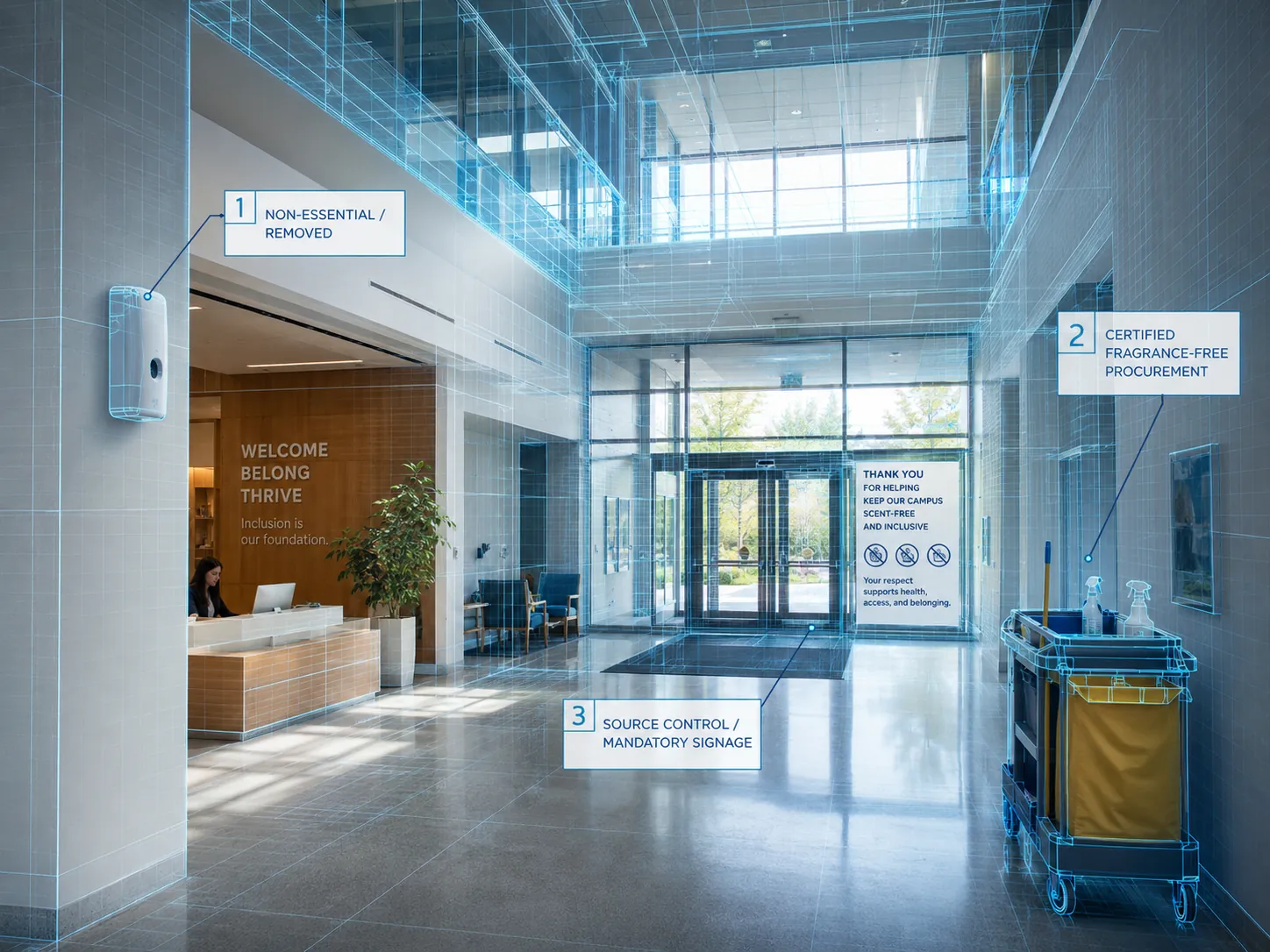
Source Control: Eliminate the chemical at the source. The Essential Use Concept: Phase out hazardous, non-essential synthetic fragrances (air fresheners, scented candles) while maintaining sanitary hygiene using unscented, low-VOC alternatives.
Key Elements of an Enforceable Policy
Use "Fragrance-Free" Over "Unscented": "Unscented" products often contain masking chemicals to hide other chemical smells. Ensure procurement teams exclusively source fragrance-free cleaning supplies, soaps, and building materials.
Clear Entryway Signage: Post prominent signage at all building entrances notifying employees, visitors, and clients that the facility is a clean-air zone and requesting that they refrain from wearing personal scents.
Contractor Integration: Ensure that external cleaning, painting, and pest control contractors use certified low-VOC, fragrance-free solutions, with all heavy applications scheduled during off-peak weekend hours.
Respectful Enforcement Protocols: Provide pathways for compliance. If an employee or visitor arrives wearing a heavy scent, have unscented body wipes or a change-of-clothing option available rather than taking a punitive approach.
By addressing the air we share as a collective resource rather than an individual preference, we can begin to dismantle the invisible barriers that keep chemically sensitive individuals locked out of daily life.
Reclaiming ordinary life starts with clean air, and your own home is the one space you can fully control. At Fragrance Free Nation, every product is already fragrance-free and essential-oil-free, and you can exclude any other ingredient you want to avoid. Visit us today to build a safe haven you can breathe in.
Never miss a guide
New fragrance-free guides and product audits, occasionally. Unsubscribe anytime.